From Bidenflation to Bank Crisis
The moves by regulators on Sunday to shore up the banking sector failed to stop the panic on Monday, with shares of many banks coming under extreme pressure. KBW Bank Index, which tracks the performance of the two dozen largest banks in the U.S., was down by around nine percent midday. The S&P exchange-traded fund tracking regional banks fell by 9.25 percent.
There is a clear through line from the spendthrift Biden administration policies to the current crisis. The $1.9 trillion American Rescue Plan overstimulated the economy, pushing inflation up to the fastest pace in four decades. Excess savings flooded the banking system, pumping banks like Silicon Valley Bank (SVB) full of what we now see are flight-prone supersized deposits.
 (Saul Loeb, Nikolas Kokovlis/NurPhoto via Getty Images; BNN)
Nearly two weeks ago, we pointed out the paper by National Bureau of Economic research scholars that established how excess savings fueled inflation:
In their paper “The Trickling Up of Excess Savings,” economists Adrien Auclert, Matthew Rognlie, and Ludwig Straub argue that the stock of excess savings fueled inflation—and continues to fuel inflation. Everyone’s spending is someone else’s income. So, when households spend stimulus payments, the money does not leave the economy, it just gets transferred. So, stimulus checks get spent over and over again.
Eventually, the money stops circulating as quickly because it “trickles up” to wealthier households, who have a lower propensity to spend the additional income. But this trickling-up process takes quite a long time. The NBER economists estimate it takes five years for the funds to fully trickle up into the bank accounts of the wealthy.
Although the Biden administration has continued to blame inflation on corporate greed and Russia's invasion of Ukraine, this is increasingly implausible. A research paper from the New York Fed recently found that increased demand accounts for two-thirds of inflation—and fiscal stimulus was responsible for half or more of the increase in demand.
The Fed accommodated the Biden administration's reckless fiscal policy by holding interest rates near zero even after the economy had begun to recover from the pandemic and lockdowns. Massive quantitative easing held down bond yields not just for Treasuries but for mortgage-backed securities as well.
When the Fed belatedly woke up to the inflation problem, it raised interest rates at such a rapid rate that banks found themselves saddled with hundreds of billions on unrealized losses on bond portfolios. When Silicon Valley Bank found itself needing to sell bonds from its portfolio, those losses became all too real. That set off a panic among its customers, swiftly bringing about the demise of the bank.
Biden Tries to Pass the Buck
On Monday, Biden and his allies attempted to shift the blame for the crisis onto changes made during the Trump administration to bank regulations. "Congress, the White House and banking regulators should reverse the dangerous bank deregulation of the Trump era. Repealing the 2018 legislation that weakened the rules for banks like S.V.B. must be an immediate priority for Congress," Sen. Elizabeth Warren (D-MA), wrote in a New York Times opinion piece.
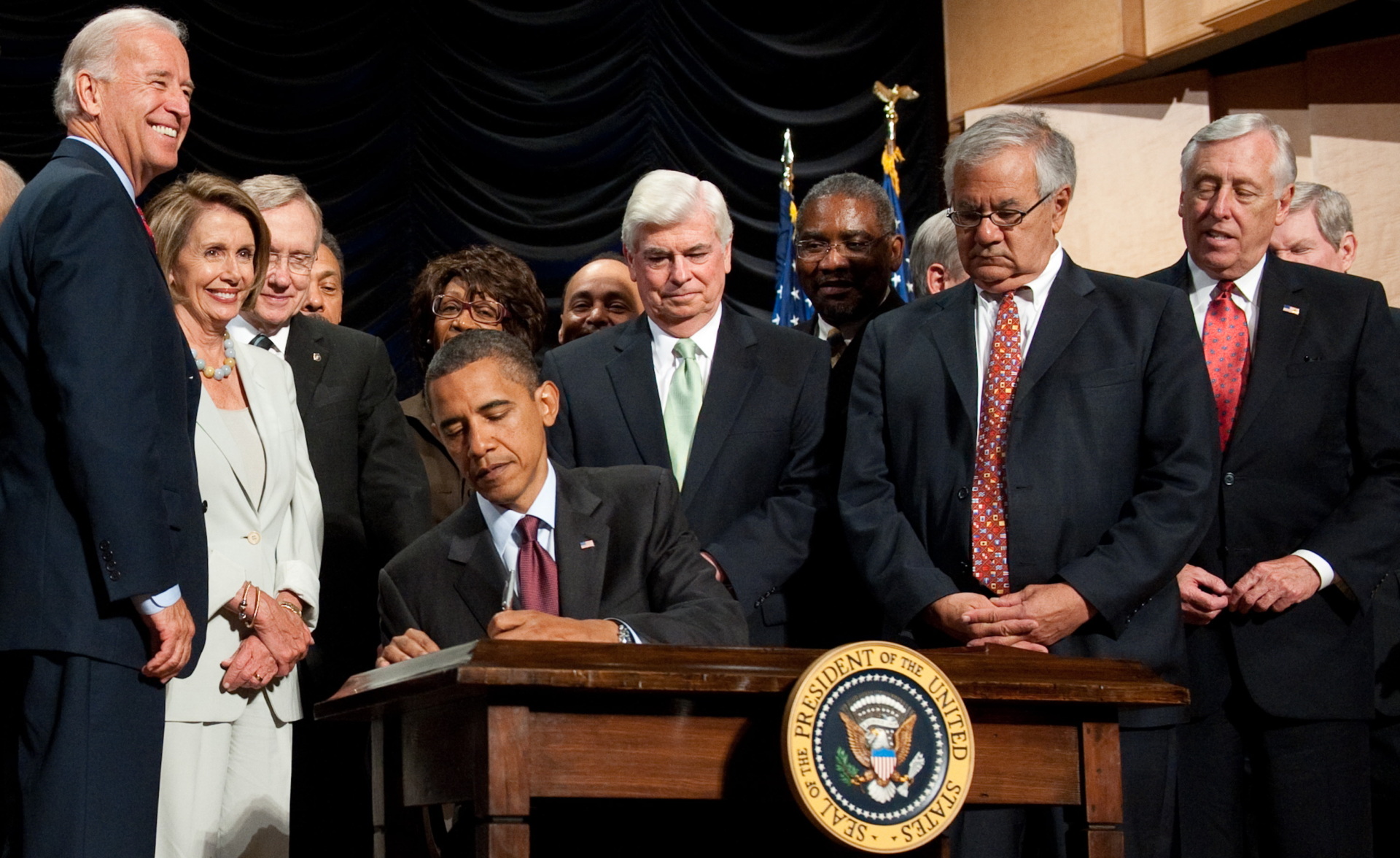 President Barack Obama signs the Dodd-Frank Wall Street Reform and Consumer Protection Act alongside Connecticut Democrat Sen. Chris Dodd (center), Massachusetts Democrat Rep. Barney Frank (second right), Vice President Joe Biden (far left), and House Speaker Nancy Pelosi (second left) on July 21, 2010. (SAUL LOEB/AFP via Getty Images)
In reality, the changes to Dodd-Frank made in the bipartisan legislation that passed in 2018 were rather minor. There is no evidence that they had anything to do with the failure of Silicon Valley Bank. At the time the bill was passed, Aaron Klein, the policy director of the Center on Regulation and Markets at the Brookings Institute, told NBC News: "This bill enshrines Dodd-Frank into law. The core elements of Dodd-Frank, stricter regulatory scrutiny and higher financial requirements, [remain in place]."
The Fed May Pause Hikes
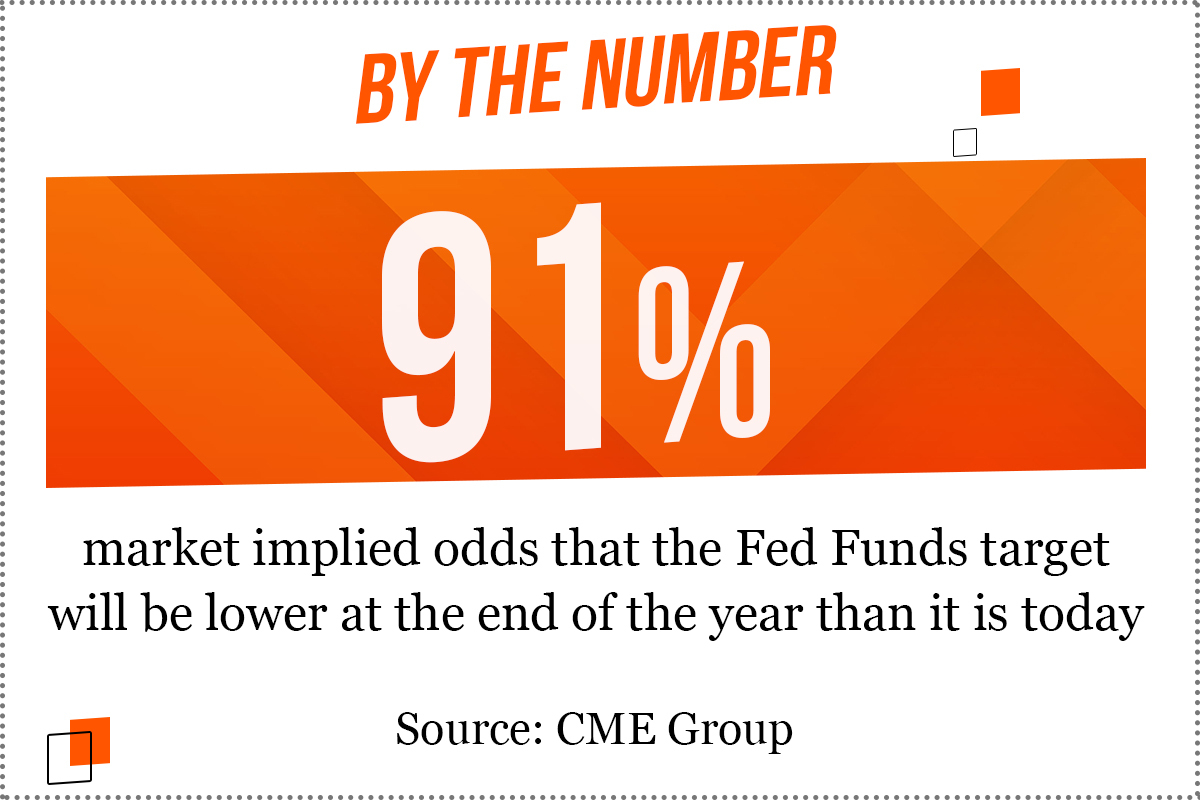
It seems increasingly likely that the banking panic will force the Fed to pause or at least slow down its interest rate hikes at the next meeting. The implied odds of a 50-basis point hike fell to zero on Monday, according to the CME Group's Fedwatch tool. The odds of no hike at all rose from zero last week to over 20 percent. Some market watchers are calling on the Fed to cut rates in the name of restoring financial stability.
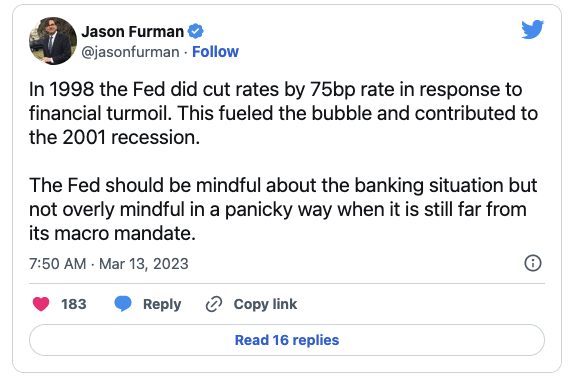
As Jason Furman pointed out, the history of the Fed switching directions in response to financial turmoil is not pretty.