A CPI Report for the Record Books
The June inflation report was even better than it looks.
Don’t get us wrong. The headline figure was glorious. The consumer price index fell by 0.4 percent for the month, the biggest decline since the big dips in March and April of 2020, when the economy was reeling from the pandemic shutdown. Prior to that, you have to go all the way back to January of 2015, when the CPI fell 0.7 percent.
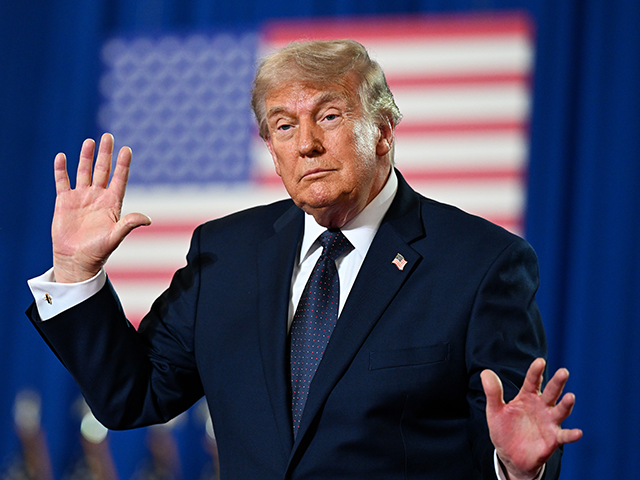
President Donald Trump dances on stage after delivering remarks during a campaign and economic policy event on May 22, 2026, in Suffern, New York. (Roberto Schmidt/Getty Images)
Not surprisingly, gasoline prices played a big role in each of those declines. The pandemic triggered a global collapse in demand for oil, sending energy prices crashing. Back in 2015, the price of Brent crude fell to around $50 a barrel after OPEC decided to try to crush U.S. shale expansion by flooding the market with supply even as demand expectations weakened due to economic softness outside of the United States. Japan’s economy had gone into contraction, Europe’s economies were contracting or stagnating, China’s property market was buckling, Brazil was in contraction, and other emerging economies were tottering.
If we reach even further back in time, there were significant monthly declines in the late summer and autumn of 2008 as the global financial crisis took hold. Prior to that, the consumer price index fell 0.5 percent in September of 2006 when oil and gas price prices fell significantly as the summer driving season ended, and there was no repeat of the Katrina disaster that sent prices soaring the prior year. And the reversal from the post-Katrina energy price surge in 2005 also triggered a 0.5 percent decline in the CPI.
The history books do not show us a similar decline until we flip the pages back to 1986. You’ll never guess what was driving that. Saudi Arabia had stopped defending the price of oil after years of OPEC losing global market share, and the price of a barrel of oil was cut nearly in half. This was a boon to the U.S. economy overall but punishing for Texas and other domestic oil producers, triggering local economic contractions.
The big picture is that oil and gasoline have played this role in driving down headline inflation in the past. But in 2020 and 2015, this decline was driven by the lack of demand due to economic contraction. So those were bad deflation stories rather than good. The 2006, 2005, and 1986 declines resemble this one more closely because they weren’t driven by downturns.
Falling Prices Are Rarely Good News—Except for Now
What sets the June report apart from even those good deflationary moments, however, is the breadth. In each of the prior good deflations, core prices kept rising. But last month, core CPI was flat for the month.
Services excluding energy-related services were flat for the month. They have risen 3.2 percent over the last 12 months. Services less rent of shelter fell 0.2 percent, the best reading since January 2021. Services excluding energy were flat for the month. Services excluding shelter were negative. Core goods prices fell 0.1 percent. So although the negative headline number was driven by energy, it was not energy alone that put disinflationary pressure on the economy.
This appears to be a unique event: general deflation or disinflation in a growing economy with minimal unemployment. This time it really was different.
To paraphrase those great 20th century poets, you don’t always get the inflation you want; but if you try sometimes, you just might find, you get the disinflation you need.